Pallet Wrapping That Pays Back: Robot S7, Masterplat and Masterwrap Explained

June 17, 2026

Summer demand and the run-up to peak season can expose the weaknesses in a manual pallet-wrapping process. If film use varies between operators, loads arrive damaged or wrapping is slowing despatch, the right pallet wrapper can bring greater consistency and control.

This guide explains the difference between stretch wrapping and shrink wrapping, where the Robot S7, Masterplat Plus and Masterwrap fit, and what to consider when setting up a reliable pallet-wrapping process.

Stretch wrap versus shrink wrap

Pallet wrap—also called stretch wrap or stretch film—is stretched around a palletised load to hold it together through controlled tension. It does not require heat and is widely used for outbound pallets, mixed products and loads of varying heights.

Shrink wrapping is a separate process. Products are enclosed in shrink film and passed through heat so the material contracts around them. It is useful when a close, protective finish is needed around individual products or grouped packs. For stabilising pallet loads, stretch wrapping is normally the more appropriate process.

Which pallet wrapper suits your operation?

The best machine depends on the load, available space, throughput and how pallets move through the warehouse.

Each approach can improve wrap consistency, but the correct specification should be based on your actual pallet dimensions, weights, load stability and daily volumes.

How to reduce unnecessary film use

Film savings should never come at the expense of load stability. The goal is to use the correct film and a repeatable wrapping recipe for each load type.

Severn supplies machine stretch film and can help match the film and machine settings to the application.

Practical setup checks

Manual, semi-automatic or mobile?

Manual wrapping can suit very low volumes, but the amount of film and containment applied may vary between operators.

Semi-automatic turntable and rotary-arm machines offer repeatable settings and reduce the physical effort of wrapping. Turntables suit stable loads; rotary arms keep fragile or unstable pallets stationary.

Mobile robotic wrappers provide flexibility when pallet sizes vary, loads are difficult to move or wrapping is needed in several areas.

A useful investment assessment should consider film consumption, labour time, load damage, throughput and the cost of moving pallets to the wrapping point. The result will vary by operation, so an on-site review is preferable to relying on a generic payback figure.

Common pallet-wrapping problems

Frequently asked questions

Is pallet wrap the same as shrink wrap?

No. Stretch wrap uses tension to contain a palletised load without heat. Shrink film contracts when heat is applied around a product or group of products.

How many times should a pallet be wrapped?

There is no safe universal number. The correct pattern depends on the load, film, machine and journey. Test representative loads and document a validated recipe for each load family.

What types of pallet wrapper are available?

Common options include turntable machines, rotary-arm machines and mobile robotic wrappers. The right choice depends on load stability, dimensions, throughput and warehouse layout.

How much does it cost to wrap a pallet?

The cost depends on the film specification, the amount used and the process. Measuring film weight or length per pallet provides a practical benchmark for comparing settings and equipment.

Choosing the next step

Severn Packaging can review your loads, layout and throughput, then recommend the most suitable Robopac pallet wrapper and machine stretch film. The aim is a stable, repeatable result using settings that suit your operation.

Contact Severn Packaging to arrange an assessment or discuss Robot S7, Masterplat Plus and Masterwrap options.


More News

View all
Blog / machinery

Pallet Wrapping That Pays Back: Robot S7, Masterplat and Masterwrap Explained

A practical guide to choosing between Robot S7, Masterplat Plus and Masterwrap, reducing avoidable film use and improving pallet stability.

June 17, 2026
7 min read
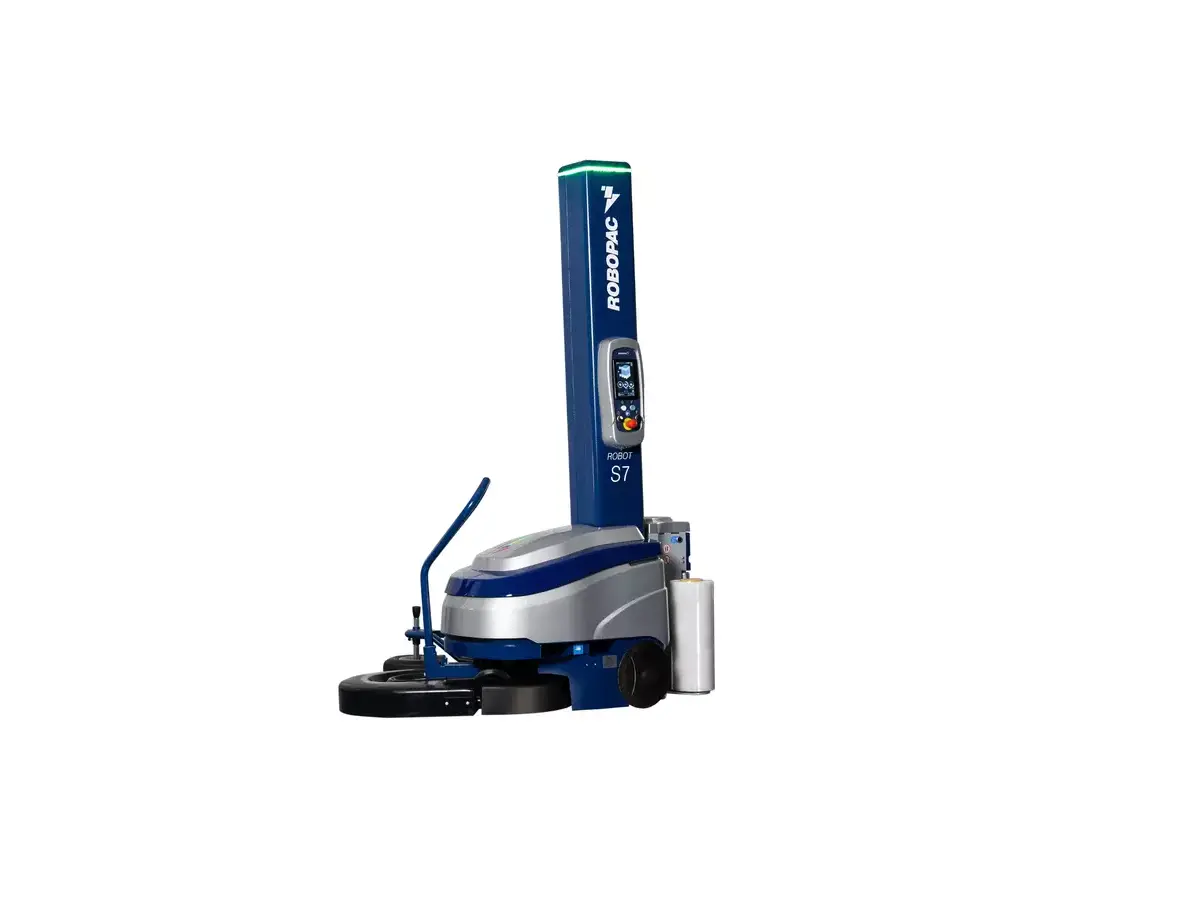
Robopac Robot S7 mobile pallet wrapper
Share this

Summer demand and the run-up to peak season can expose the weaknesses in a manual pallet-wrapping process. If film use varies between operators, loads arrive damaged or wrapping is slowing despatch, the right pallet wrapper can bring greater consistency and control.

This guide explains the difference between stretch wrapping and shrink wrapping, where the Robot S7, Masterplat Plus and Masterwrap fit, and what to consider when setting up a reliable pallet-wrapping process.

Stretch wrap versus shrink wrap

Pallet wrap—also called stretch wrap or stretch film—is stretched around a palletised load to hold it together through controlled tension. It does not require heat and is widely used for outbound pallets, mixed products and loads of varying heights.

Shrink wrapping is a separate process. Products are enclosed in shrink film and passed through heat so the material contracts around them. It is useful when a close, protective finish is needed around individual products or grouped packs. For stabilising pallet loads, stretch wrapping is normally the more appropriate process.

Which pallet wrapper suits your operation?

The best machine depends on the load, available space, throughput and how pallets move through the warehouse.

Each approach can improve wrap consistency, but the correct specification should be based on your actual pallet dimensions, weights, load stability and daily volumes.

How to reduce unnecessary film use

Film savings should never come at the expense of load stability. The goal is to use the correct film and a repeatable wrapping recipe for each load type.

Severn supplies machine stretch film and can help match the film and machine settings to the application.

Practical setup checks

Manual, semi-automatic or mobile?

Manual wrapping can suit very low volumes, but the amount of film and containment applied may vary between operators.

Semi-automatic turntable and rotary-arm machines offer repeatable settings and reduce the physical effort of wrapping. Turntables suit stable loads; rotary arms keep fragile or unstable pallets stationary.

Mobile robotic wrappers provide flexibility when pallet sizes vary, loads are difficult to move or wrapping is needed in several areas.

A useful investment assessment should consider film consumption, labour time, load damage, throughput and the cost of moving pallets to the wrapping point. The result will vary by operation, so an on-site review is preferable to relying on a generic payback figure.

Common pallet-wrapping problems

Frequently asked questions

Is pallet wrap the same as shrink wrap?

No. Stretch wrap uses tension to contain a palletised load without heat. Shrink film contracts when heat is applied around a product or group of products.

How many times should a pallet be wrapped?

There is no safe universal number. The correct pattern depends on the load, film, machine and journey. Test representative loads and document a validated recipe for each load family.

What types of pallet wrapper are available?

Common options include turntable machines, rotary-arm machines and mobile robotic wrappers. The right choice depends on load stability, dimensions, throughput and warehouse layout.

How much does it cost to wrap a pallet?

The cost depends on the film specification, the amount used and the process. Measuring film weight or length per pallet provides a practical benchmark for comparing settings and equipment.

Choosing the next step

Severn Packaging can review your loads, layout and throughput, then recommend the most suitable Robopac pallet wrapper and machine stretch film. The aim is a stable, repeatable result using settings that suit your operation.

Contact Severn Packaging to arrange an assessment or discuss Robot S7, Masterplat Plus and Masterwrap options.
Need advice?
Book a free packaging audit
Our engineers visit your site, review your flow, and send a 90-day action plan.